Nostalgia City Mysteries

Mark S. Bacon

Category Archives: flash fiction

Flash fiction taking hold, says Masih; style becoming more experimental

Flash fiction is becoming popular in part because the academic world is beginning to take notice and more colleges and universities are teaching the genre, says author and flash fiction writer Tara L. Masih.  This popularity is not necessarily connected to our shrinking attention spans.  That’s been going on for a century or more, she says.

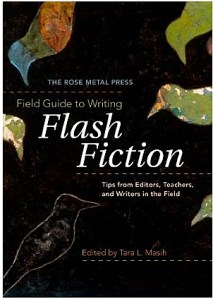
Masih is the author of The Rose Metal Press Field Guide to Writing Flash Fiction.  In a recent email interview she explored flash fiction and its antecedents. Rode Metal Press Guide to FF  Es  Despite its recent growth, Masih says, flash fiction is not considered serious fiction by everyone.
“…I’ve encountered some pretty strong opinions about flash not being a serious literary form,” she says.  “There is the attitude that because it is so short, it must be easier to write and therefore not worthy of being included in the literary canon.”

With a number of respected writers now using flash fiction,  however, Masih says, and with more students requesting it, “the academic world is beginning to take a closer look.”

Flash fiction or shorter fiction, says Masih, was actually more popular during the 1800s and into the 1900s.  Due in large part to the Industrial Revolution, our attention spans began getting shorter, she says.  The population was becoming more literate but had less time to read.  “This climate,” she says, “allowed writers like O. Henry and Edgar Allan Poe to make a living writing short works for magazines.”

Short fiction dwindled–or went underground says Masih–“when periodicals folded and with the advent of television.

“Literary journals kept it going, and it moved away from the formulaic O. Henry style to a more experimental, poetic style,” Masih says.  “The recent interest is a resurgence rather than a new movement.”

According to Masih, the Internet and the proliferation of online flash fiction journals has helped spread the popularity recently, as has flash anthologies edited by Robert Shapard and James Thomas.

It was one of those anthologies, Sudden Fiction, that made Masih realize that more and more authors were writing little stories and that flash was becoming its own genre.   In high school her writing teacher taught students to write vignettes.

“[The teacher] believed in writing from deep wells and capturing intense emotional moments,” she says. “So my prose style was formed very early in my writing life.”

Masih earned an MA in writing and publishing from Emerson College, where she taught freshman composition and grammar.  In addition to her instruction book on flash fiction, she is the author of, Where the Dog Star Never Glows, a collection of short fiction that was finalist in the National Best Book Awards.

Short short fiction comes in many categories,  just like longer works, she says.  Flash fiction stories can be considered literary, science fiction, speculative, horror, or romance.  The term flash fiction, she says, applies to stories less of less than 1,500 words.  Tiny stories, as popularized by some journals that look for fiction under 100 words, are in the realm of microfiction, says Masih.

“Some writers refuse to use the term ‘flash’ and insist on ‘short shorts,’ ‘one-page fictions’ or simply ‘stories,’” she says.

“Flash is just one label.  There are many.   And I don’t think labeling helps anything creative.”

Hyperlinks

Works by Tara L. Masih

The Rose Metal Press Field Guide to Writing Flash Fiction

Where the Dog Star Never Glows

The Chalk Circle

How popular is flash fiction                     part 2: Writing contests

Frequently used as an exercise in English classes, flash fiction is also the subject for hundreds of writing contests around the English-speaking world.  Just pop “flash fiction contest” into a search engine and you’ll instantly have thousands of results.  Colleges, magazines, libraries, writers clubs and other organizations sponsor contests that take many forms.

A common device for a flash fiction contest (and assignments in English comp classes as well) is a photo prompt.  Writers are asked to create a story around a picture.  Sometimes the prompt is simply a setting, a character or a random series of words.  Other contests limit entries to a particular subject matter or form and certainly all contests have word limits.  But of course, since few can really agree on what length constitutes a flash fiction story, contest word limits are all over the place.

Here’s a quick sample of recent contests:

New York City literary agent Janet Reid sponsored a contest of 100 words.  The agent, who specializes in crime fiction, required writers to include the words, double, trouble, bubble, twin, and spin in their stories.

The website of Figment.com, an online writers community, advertised a contest co-sponsored by a coffee roasting company.   The five-day contest featured prompts related to coffee, such as a story about a character who gets the jitters from too much caffeine.

The Chicago Public Library sponsored a 750-word-or-less contest for stories set in Chicago and inspired by Chicago.  The Frisco (Texas) Public Library, held a contest open only to patrons of the Dallas suburb library.  Winners were honored at an awards reception and top entries were published on the library’s website.

Fish Publishing Co. of Ireland sponsored a flash fiction contest it says, “is an opportunity to attempt what is one of the most difficult and rewarding tasks – to create, in a tiny fragment, a completely resolved and compelling story….”

A combo contest is sponsored by Biscuit Publishing in the U.K.  Contestants are asked to submit a flash fiction story and a short story (to 5,000 words).   Cash and publishing opportunities are offered as prizes.

The Writers Union of Canada recently sponsored a “postcard story contest.”  (Postcard fiction is another term for flash fiction.)  Some 788 stories (under 250 words) were received and the winner earned $750.

Contest are also popular with colleges and universities.  Here’s a sample of colleges that sponsor flash fiction contests:  Moorpark College, Moorpark, Calif.; Appalachian State University, Boone, N.C.;  University of Wisconsin – Eau Claire; University of Salford, Manchester, U.K;  DePaul University, Chicago; West Virginia University, Morgantown, W.V.; University of Arkansas – Little Rock; and Minnesota State University – Mankato.

Measuring flash fiction’s popularity

How popular is flash fiction?  Anthology sales and the proliferation of online and print flash fiction journals are two measures.  Here are two more:  Dozens of colleges and universities now teach flash fiction and an untold number of contests are sponsored weekly, monthly, annually to encourage writers to take up the genre.

First, the college courses.  From California community colleges to the Ivy League, classes in flash fiction are appearing in the catalog listings of English departments.

Here is a sample of colleges offering flash fiction instruction.

–Stanford – English 190T-1: Topics in Intermediate Fiction Writing: Flash Fiction.

–University of Cambridge (UK) – Flash Fiction: Unlocking the Writer Within.  According to the class listing,  “This weekend of classes is designed to unlock your potential by setting you loose on a series of short writing challenges, from writing a fairy story as a tabloid journalist, to writing your life in numbers.”

–Brown University – The universityoffers a course in Flash Fiction for high school students preparing for college.

–University of Virginia – Contemporary Flash Fiction – Theory and Practice.  “One might be tempted to attribute ‘flash fiction’ to the explosion of social media and its ever-briefer modes of expression,” writes the course’s instructor Elizabeth Denton, “but short fiction has existed in literature for a long time, depending on how it’s defined.”

–South Puget Sound Community College – The Olympia, Wash., college offers a seminar entitled, Become a Published Flash Fiction Writer.

–UCLA –  The university’s extension offers a course in flash fiction.  The course description says,  “Flash fiction is narrative in a hurry.”

–Wake Forest University – The Winston-Salem, N.C., university offers a course in flash fiction and the university magazine recently challenged the faculty to write 25-word stories for publication.

Other colleges that offer flash fiction courses or seminars include: Cornell University, Ithaca, N.Y;  SUNY Plattsburg, N.Y.; Washington University, St. Louis; American University, Washington, D.C.; Wesleyan University, Middletown, Conn.; Duke University, Durham, N.C.; and Eastern Kentucky University, Richmond, Ky.

A later installment here will list some of the many flash fiction contests held regularly.