Nostalgia City Mysteries

Mark S. Bacon

Category Archives: New mystery book

Christie, Woolrich, Grafton and 37 more cook up short stories of crime and puzzlement

0
Masterpieces of Mystery and Suspense
Compiled by Martin H. Greenberg
International Collectors Library
651 pages  1988
See below for prices and availability

Note to regular readers: This review originally appeared in the mystery books review section of this website that has now been merged into the weekly blog page. The blog will continue to include new reviews of mystery/suspense books and movies now that past pages have been incorporated here.

It’s the late 1950s, Ginger works in a dime-a-dance joint in a rundown part of town, and someone is killing taxi dancers.

When two police detectives show up at the dance hall one night, Ginger falls for the taller one.  “…if I’d had any dreams left, he coulda moved right into them.”

The cops only know the killer’s favorite song, the kind of ring he has on one finger and the bizarre way he leaves the dancers’ bodies.  With nothing more to go on, they try a stake out.   Luckily, Ginger is one sharp cookie and a step ahead of the police.  Question is, will she be a step ahead of the serial killer?masterpieces of mystery
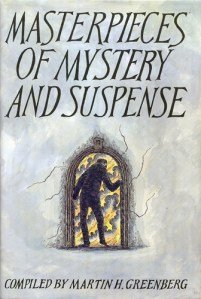
This carefully crafted tale, The Dancing Detective, is classic noir by Cornell Woolrich and it’s one of 40 short stories in Masterpieces of Mystery and Suspense, a must for the library of every mystery and short story lover.  The stories are short, 10-20 pages, but they clearly demonstrate how a skilled mystery/suspense writer can weave a tale, create characters with depth and have you guessing right up to the end–all in a tiny package.

Woolrich’s story is a good example, combing rich characters and dialog with a snappy plot.   Aspiring mystery writers: read this story.  See how Woolrich creates a thick, gloomy atmosphere and tells us so much about his characters through the way they talk in addition to what they talk about.  Woolrich, like many of the authors in the anthology, were or are known as much for novels as well as short stories.  And again, like other authors, many of Woolrich’s stories became movies.  One of his most famous was Hitchcock’s 1954 Rear Window.

I discovered this collection of gems in a used book store.   It can be found easily online.  See the note at the end of this review.

Writers from Poe to Sue Grafton and Lawrence Block are represented here.  Stories of suspense, mystery and those featuring hard boiled detectives fill the pages.  The collection’s anthologist, Martin Greenberg, introduces each story with a brief biographical sketch of the author and a few words about the selection.

The usual suspects are all here: Dorothy Sayers, Earl Stanley Gardner, Agatha Christie, Ngaio Marsh, P.D. James, Ross Macdonald, Ellery Queen, Dick Francis and John Dickson Carr.  A few writers not known for mysteries also provide fascinating stories.  Greenberg included Mark Twain, Ray Bradbury and Stephen King in the collection.

King’s Quitters, Inc. has Dick Morrison run into an old friend in an airport lounge, back when you could smoke in an airport.  The friend has quit the habit for good, he tells Morrison, with the help of an organization that guarantees its results.  In this suspenseful story, the method is the mystery and Morrison’s trials trying to stay off cigarettes can be most appreciated by ex-smokers.

In Arthur Conan Doyle’s The Copper Beeches, Holmes and Watson are approached by a  governess who lives in a country house and works for an eccentric gentleman.  She becomes fearful when her employers ask her to pose for them in certain ways.

Frederick Forsyth’s contribution is, There Are No Snakes In Ireland, a creepy tale of revenge set in Ireland and India.

Rex Stout offers, Help Wanted, Male.  One of the longest entries in the collection, the story begins with a man who has received an anonymous letter saying he is about to die.  He goes to Nero Wolfe for help.  Archie Goodwin figures the man would need to look elsewhere:

“In the years I had been living in Nero Wolfe’s house…I had heard him tell at least fifty scared people, of all conditions and ages, that if someone had determined to kill them and was going to be stubborn about it, he would probably succeed.”

The next day, of course, the man is killed and the police want to know what Wolfe and Goodwin know about it.

If you’re looking for a collection of new crime and detection stories, obviously this isn’t it.  The book is 25 years old and many of the stories are decades older than that.  If, however, you want to be challenged and entertained by some of the best mystery and suspense writers who ever pounded a typewriter, this is the collection for you, if you can find it.

Note on availability:  The book is out of print, but used copies are available from many online sellers.   I purchased my hardbound copy (International Collectors Library edition, listed above) from our local library’s  book store.   A check of listings for the book at Amazon and other online stores yielded the names of three other publishers and page lengths.  Most common was an edition from St. Martin’s Press at 672 pages.  Minotaur and Doubleday are also listed as the publisher on some sites.   Most available copies are paperback going for $1 or less; shipping charges vary.

Next week: In the late 1940s, film director Harold Clurman attempted to create a cinema version of Deadline at Dawn, the noir suspense novel by Cornell Woolrich (writing as William Irish and reviewed here last week). Susan Hayward headed a cast of many notable character actors of the period. Did Clurman succeed in creating a class ‘A’ roman noir? See my review next time.

Classic car quiz and much more

0

Classic car quiz 1  5662

Can you identify this car? Tell me the make, model and year.

What’s happening here
Lots of things are happening around Baconsmysteries.com. There’s a whole new look. If you’re reading this on email, check out the new site. As you move through the pages you’ll notice the main photo at the top of the page changes occasionally with different views of my new theme, Nostalgia City.

Nostalgia City is a re-creation of an entire small town from the early 1970s. It has period stores, clothes, music, cars, hotels, restaurants—everything you’d need to relive the past. And it’s all authentic. Drenda Adair, Ph.D., vice president of history and culture, ensures the accuracy of everything you see and hear. Of course visiting the most elaborate theme park in the world is not inexpensive. You can, however, rent classic cars from the 1960s and 1970s, just like the one in today’s quiz.

But there’s trouble. There were not supposed to be accidents. People were not supposed to be killed.
(See home page.)

Visit here often
New posts will include:
– More installments of mystery flash fiction
– Reviews and previews of mystery and suspense novels
– Quizzes and other brain drainers about ’60s and ’70s music,  cars, culture and news events
– Information on other amusement parks
– Further details about Death in Nostalgia City (to be published in early October.)

New mystery releases

Deadly Assets
Wendy Tyson
Henery Press
296 pages
Philadelphia’s premier image consultant, Allison Campbell, helps others reinvent themselves. But on the same day, two of her clients disappear: an eccentric Italian heiress and an eighteen-year-old pop star from Scranton. What do they have in common? Allison’s colleague Vaughn is the last to have seen each of them. This is the second in the gripping Allison Campbell series.

The Black Hour
Lori Rader-Day
Seventh Street Books
331 pages
Sociology professor Amelia Emmet is shot by a student she didn’t know who then kills himself. She’s left with a walking cane and a search for a reason why.

Courier
Terry Irving
Exhibit A
336 pages
It’s 1972. Vietnam vet Rick Putnam races at breakneck speed through the streets of Washington, D.C. as a motorcycle courier.   When he picks up film from a news crew interviewing a government worker with a hot story, his life begins to unravel as everyone involved in the story dies within hours of the interview and Rick realizes he is the next target.

Eat What You Kill
Ted Scofield
St. Martins
304 pages
Evan Stoess is a struggling young Wall Street analyst obsessed with fortune and fame. A trailer park kid who attended an exclusive prep school through a lucky twist of fate, Evan’s unusual past leaves him an alien in both worlds, an outsider who desperately wants to belong. When a small stock he discovers becomes an overnight sensation, he is poised to make millions, but disaster strikes.


Oh yeah, I forgot to mention
My hard drive crashed two weeks ago. The folks who constructed my desktop computer sent someone out to replace the drive (under my 2-year warranty) and I had back ups. But nothing’s ever the same. After a week of reinstalling software and tweaking settings on programs I use every day, I can now say that I still hate computers.

Now I’m investigating cloud back up services. Sounds like the ideal automatic back up. The downside? Two months of 24/7 uploading to get started. (I have a lot of picture files.) Now if my upload speed matched my download speed, I’d have it backed up in a few days.

Mystery writer T. Jefferson Parker: from ‘Laguna Heat’ to ‘Silent Joe’ and beyond

1
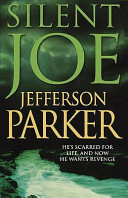
Silent Joe
T. Jefferson Parker
Hyperion reprint edition 2002   416 pages
Mass market paperback $7.99

I have a signed copy of Laguna Heat, T. Jefferson Parker’s first mystery novel.   It was a gift from a friend. My wife and I were living not far from Laguna at the time and it was a huge treat to receive the book. Everyone in Orange County was talking about it.

A few years later I met Parker when he was a speaker at an unusual college course on forensic science. In class, Parker talked about his book, his background as a newspaper reporter and some of the details of writing a good mystery story.

Here’s Parker’s first sentence in Laguna Heat: “A perfect morning in a city of perfect mornings; an artist would have worked, a god would have rested.” On his blog he says he was proud of that sentence.   But it was the next two Silent Joesentences, especially the metaphor at the end, that I remember:

       “The convertible slowed as it approached the stables, then pounced from the road onto a gravel driveway. Its headlights swung left-to-right, acute angles filling with dust, while gravel popped under the tires like grease in a skillet.”

            Laguna Heat was a hit. It became a TV movie starring Harry Hamlin, Jason Robards and Rip Torn. Parker’s career was set. Since that time, he’s written 20 novels and picked up three Edgar awards. Silent Joe earned Parker his first Edgar in 2000 and it does not take a detective to see why the first-person novel about “acid baby” Joe won the award. If you’re looking for a place to acquire a taste for T. Jefferson, this is a good starting point.

Joe Trona is a 24-year-old Orange County Sheriff’s deputy assigned to jail duty. Many evenings, he serves as driver and often guard for his adopted father Will, a kind-hearted but dishonest county supervisor. The extent of his dishonesty, albeit with mostly good intentions, is exposed slowly to Joe throughout the novel. One evening as Joe is escorting his father Will on an errand that includes rescuing a young girl who apparently has been kidnapped, Will is trapped and murdered in an alley while Joe looks on, unable to dispatch all of his father’s attackers.

The balance of the book is Joe’s search for Will Trona’s killers. Along the way, Joe revisits his painful past. His birth father poured acid on Joe’s face when he was a baby, forever scaring him. Five years, later Will adopted Joe from an orphanage, an act of kindness that Joe has never forgotten. When he grew up, Joe went into law enforcement.

When possible, Joe wears a hat pulled low over his face. Parker’s description of Joe’s face makes him sound somewhat like the phantom of the opera.

Double-dealing Orange County politics forms the background for the story. A rich developer and his psycho son, a county department head on the take, the county’s premier televangelist, an odd assortment of inmates and other crooks plus members of Joe’s unusual family populate the novel. But Joe is the star.

He’s a tough cop. He’s muscular and works out regularly, knows how to handle himself and is a skilled marksman. As a result, this could be a Rambo type story with a hard-ass tough-guy protagonist bent on revenge, but Joe is a complex character and the complications in his life lift this story to surprising and rewarding heights.

I marveled at Parker’s creation and wondered if other readers–or reviewers–recognized the subtle, elusive nuances I sensed in Joe. Bill Sheehan, a Barnes and Noble reviewer, said Joe was an “evolving protagonist with love and loyalty issues.” Some reviewers referred to Joe’s intelligence. He is smart and has an eidetic memory. He recalls everything he sees and hears.

But there’s more to Joe. He’s polite–not smart-alecky–and doesn’t swear. He’s slow and introspective; his scars are not just on his face. One reviewer said Joe was “hesitant.” The voice Parker gave Joe, however, is unique in a way that makes other “unique” voices in fiction sound commonplace.

Silent Joe gets more gritty and compelling as it goes along. Joe learns more about his suspects, his parents and himself.   He exchanges barbs with the sadistic jail inmates and also falls in love.

Parker keeps up the pace using staccato sentences and fragments to move the action swiftly in some scenes. He doesn’t neglect metaphors, either. Explaining rush hour traffic he says, “But cars on Orange County freeways at six o’clock move about as fast as cars on showroom floors.”

The novel’s supporting cast–particularly the jail prisoners–from the crazy biker who carried the head of a victim around in a pillowcase tied to his hog for a week to a former assistant DA who planned to go to Tahiti with his family when he got out, fills the story of Joe’s life with fascinating details.

Toward the end of the book, Joe talks to one of his father’s friends, or more appropriately, acquaintances. After the meeting, Joe summarizes his situation and reviews his father’s oft-repeated advice that was possibly Joe’s nascent philosophy:

              “The idea struck me that I was inheriting my father’s friends, as well as his enemies. I just wasn’t positive which was which. I wondered if Will was. You only had to be wrong once.

                               “Love a lot.  Trust few.”