Nostalgia City Mysteries

Mark S. Bacon

Unknown's avatar

About mbaconauthor

Mystery writer and journalist; former newspaper police reporter.

Today’s crime short-short

0

Here is a sample of 100-word flash fiction from my book, Cops, Crooks and Other Stories. There are 99 more. Just click on the book cover on the left side of my blog.

Problem at the Bank

“How soon do you start your big vacation?”

“Huh, oh, couple of days.”

“Wish I had good news for you, but I don’t. We had to release that employee of yours, Alonzo.”

“Release him? Why? I thought he–”

“Not enough evidence. And now we’ve hit a stone wall. In the week since your bank reported the big embezzlement, we’ve interviewed every one of your employees–and come up empty.”

“Yeah?”

“And this is a small town. It’d be hard to hide that kind of cash.”

“Uh huh.”

“So, did you say you and your wife were going to South America?”

A look back at Leonard and ‘Killshot’

1
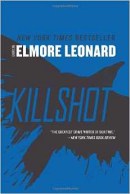
Killshot: A novel
Elmore Leonard
William Morrow Paperbacks; Reprint edition   304 pages
Originally published 1989
$11.71 paperback   $9.78 Kindle

Armand Degas, aka Blackbird, an Ojibway Indian, is a cold-blooded professional hitman taking his jobs and payments from Detroit mobsters.   He meets Richie Nix, a cheap, addle-brained crook when Nix tries to rob him. Although Degas–Bird–realizes Nix is a loose cannon, and then some, the two form a loose partnership in crime. Nix also kills people–but only when they piss him off.

Iron worker Wayne Colson and his wife Carmen become the two killers’ targets in Elmore Leonard’s acclaimed Killshot. The essence of the story is simply a chase: two killers versus two seemingly ill-fated citizens. Simple in concept, elegant in execution, Killshot is a character-driven story about four diverse people who you will come to know well. In Leonard’s hands, the four become real as the author fleshes out the complex relationships between Wayne and Carmen and Bird and Nix.

When Leonard died late last year, he had written nearly 50 novels. He first wrote westerns, such as The 3:10 to Yuma, but when the genre started to fade, he turned to crime. In Leonard’s obituary, Los Angeles Times writer Dennis McLellan said the author, “populated his novels with con men, hustlers and killers, with names like Chili, Stick and Ordell. He plunged readers into a sea of urban sleaze, spiking his tales with mordant humor and moral ambivalence.”

Killshot fits this description. Most of the story takes place in dreary marshland in southern Michigan near the Canadian border.  While the killers are adept at dispatching folks, the various law enforcement representatives provide the Coulsons little solace or effective protection. In fact, one member of the U.S. Marshals Service becomes a menace.Killshot

I prefer mysteries to straight crime novels, but I’d never read Leonard and the news of his passing brought a variety of stories about his work. I chose Killshot as it was recommended by several sources as one of Leonard’s best. It’s a gripping, nuanced tale of love, fear, vengeance, death, and the responsibilities we owe to those we love and to others.   The killers are developed characters and Coulsons are not your usual terrified quarries.

The ending of the novel is reminiscent of the final scene in a popular 1996 crime film (unrelated to Killshot). It’s a suitable, agreeable ending as it solidifies our image of Wayne and Carmen and original because the novel predates the film by seven years.

Woolrich: novels or short stories?

0

Last week, a reader, intrigued by my recent articles, asked if I could recommend a starting point for reading Cornell Woolrich. Although I’m just beginning to explore this little-known author myself, I have a suggestion or two.

The Woolrich works I’ve read thus far are best considered for the journey, rather than the destination. Each scene, each page drags you deeper into the protagonist’s miasma as he or she races against the clock or death or both. The idea that every scene in a detective story should be as important and as involving as the conclusion–when the mystery is solved–was a priority for Raymond Chandler. And in his novels, each chapter and each dark, gritty scene created more trouble for Philip Marlowe. Finding out whodunit was just the final step in a perilous journey. The same can be said for Woolrich.

Therefore, I recommend the 1941 novel, The Black Curtain, as an introduction to Woolrich. In it, Frank Townsend gets a bump on the head and suddenly three years of his life disappears–or reappears. He searches for his home and discovers his apartment is vacant and that his wife has moved out.   He finally finds her and she tells him she hasn’t seen him for three years.

So starts this different version of an amnesia story. After he’s been back with his wife a short time, Townsend discovers someone is following him. The more dangerous the pursuit becomes, the more Townsend realizes he must figure out what happened during the missing three years.

His struggle to discover his past leads him through a threatening world of suspicious looks and dead ends. The fast-paced story includes a case of murder and a decrepit, isolated mansion.The Dancing Detective
Like most roman noir novels, there isn’t exactly a Hollywood ending. The plot twists at the end leave some unanswered questions, but each step along the quick trip through Townsend’s cloudy world is worth the effort and then some.

To be picky, Woolrich uses terminology that refers to a semi-automatic pistol after he has already identified a gun as a revolver. The difference between the two types of handguns is significant in several ways and they look nothing alike.   But confusing revolvers for semi-autos is so common in mysteries that I didn’t even notice the first time through.

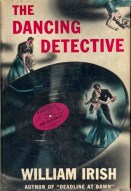
The other way to get an introduction to Woolrich is through one or more of his numerous short stories. The best one I’ve read is “The Dancing Detective” written under the pen name, William Irish. The protagonist’s first person voice is unique and so strong she captures you from the first paragraph. “Dancing Detective” appears in several mystery/suspense anthologies and in Woolrich collections. Of course for short stories it’s hard to beat “Rear Window,” Woolrich’s most famous creation. Even if you’ve seen the movie, the story is still compelling.