I’m writing this with two fingers. How embarrassing.
Having begun my writing career as a newspaper reporter, I’ve never worried about writer’s block. Composing on the fly is built-in. You can’t tell a city editor, “Look, I need to wait for inspiration.”
Indeed, I’ve always joked that the only true form of writer’s block is a broken arm.
No, I don’t have a broken arm, just a painful one. Typing even for a short time makes my right forearm feel as if someone has put out a cigarette on it. Make that a cigar. Physical therapy didn’t help. The heavy-duty prescription anti-inflammatories only moderate the pain. I see an orthopedist in two days.
In the meantime, I’m going to recycle an article I posted here years ago. Cornell Woolrich is of my favorite noir authors and this novel from1944 is one of his best.
In this Woolrich classic the city is only one of the enemies
Deadline at Dawn
Cornell Woolrich (writing as William Irish)
American Mystery Classics (Penzler Publishers), June 2022
288 pages
Kindle 6.99 Trade paperback $11.95
New York City has Bricky Coleman in its clutches. The small-town girl came to the city to become an actress, but it didn’t work out. Now she’s a dime-a-dance girl living in a dingy walk-up, bereft of spirit and hope. One evening she dances with Quinn Williams, another small-town transplant with equally dismal prospects. Somehow Quinn manages to erode Bricky’s layers of cynicism and suspicion. They become friends and allies in solving a dangerous puzzle.
Like most Cornell Woolrich novels, 1944’s Deadline at Dawn is dark and fast moving. The entire book occupies only a few early morning hours. Getting around a burglary and solving a murder stand in the way of the two young protagonists’ escape from their dismal lives. An early coincidence and one or two later plot twists require a significant suspension of disbelief, but you sign on quickly because the dark corners of the city and its malevolent denizens are easily accepted as Woolrich draws you and his young protagonists into a race against the clock.
The atmosphere is thick. Bricky looks up a dark street. “Three anemic light-pools widely spaced down its seemingly endless length did nothing to dilute the gloom; they only pointed it up by giving contrast.”
For Bricky, the main enemy isn’t a lurking murderer, it’s the city itself. It wants to possess her and grind her down. The young protagonist’s nemesis is similar to a lead character’s unnatural fear of stars in the sky in Woolrich’s Night Has a Thousand Eyes. Merciless, mysterious forces conspiring to thwart success is a common Woolrich theme.
Looking for a murderer so they can put a regrettable event in Quinn’s life behind them and escape to small-town paradise, the two split up and dash about the city at night. In back-and-forth chapters each amateur sleuth thinks he or she is on the right trail, but of course there are complications, dead ends and unexpected dangers. We move quickly from Quinn’s perilous encounter with a stranger who he follows around the city, to Bricky’s capture by a pair she thinks did the murder.
I have a copy of the first printing of the “Tower Books Motion Picture” edition illustrated with photos of the 1946 film based—very loosely—on the book. Instead of chapter numbers or titles, there are faces of a clock, and each chapter heading has the hands moving closer to the 6 a.m. deadline Quinn and Bricky are racing toward. That’s when they hope to catch the interstate bus and escape New York City.
Note that Deadline at Dawn is an example of Woolrich’s practice of recycling scenes, characters and events from short stories into novels. The first scene of Bricky’s dance hall dysphoria is similar to the beginning of a short story, Dancing Detective, that focuses on another cynical taxi dancer with moxie. After this first scene, however, the novel departs completely from the short story.
Like so many Woolrich stories, Deadline at Dawn looks at the many faces of fear. “And the man who says he’s never been afraid is a liar,” Woolrich writes. Later he tells us, “Fear rots the faculties.” Unlike the movie version, the novel maintains the pessimism, the dread and the eerie notion of noir. It’s a gem.
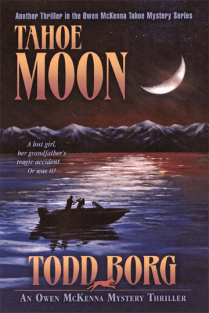 found near the body, and initially the police surmise that Dexter was the victim of a logging accident. Or was it suicide? Or murder? Regardless, McKenna has a deaf eight-year-old on his hands.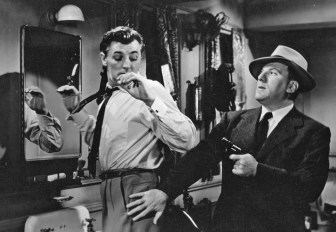
 Nostalgia City Mysteries