Nostalgia City Mysteries

Mark S. Bacon

Category Archives: New mystery book

Flash fiction taking hold, says Masih; style becoming more experimental

Flash fiction is becoming popular in part because the academic world is beginning to take notice and more colleges and universities are teaching the genre, says author and flash fiction writer Tara L. Masih.  This popularity is not necessarily connected to our shrinking attention spans.  That’s been going on for a century or more, she says.

Masih is the author of The Rose Metal Press Field Guide to Writing Flash Fiction.  In a recent email interview she explored flash fiction and its antecedents. Rode Metal Press Guide to FF  Es  Despite its recent growth, Masih says, flash fiction is not considered serious fiction by everyone.
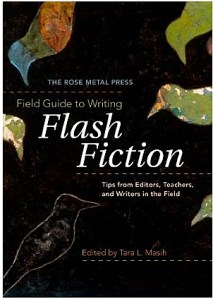
“…I’ve encountered some pretty strong opinions about flash not being a serious literary form,” she says.  “There is the attitude that because it is so short, it must be easier to write and therefore not worthy of being included in the literary canon.”

With a number of respected writers now using flash fiction,  however, Masih says, and with more students requesting it, “the academic world is beginning to take a closer look.”

Flash fiction or shorter fiction, says Masih, was actually more popular during the 1800s and into the 1900s.  Due in large part to the Industrial Revolution, our attention spans began getting shorter, she says.  The population was becoming more literate but had less time to read.  “This climate,” she says, “allowed writers like O. Henry and Edgar Allan Poe to make a living writing short works for magazines.”

Short fiction dwindled–or went underground says Masih–“when periodicals folded and with the advent of television.

“Literary journals kept it going, and it moved away from the formulaic O. Henry style to a more experimental, poetic style,” Masih says.  “The recent interest is a resurgence rather than a new movement.”

According to Masih, the Internet and the proliferation of online flash fiction journals has helped spread the popularity recently, as has flash anthologies edited by Robert Shapard and James Thomas.

It was one of those anthologies, Sudden Fiction, that made Masih realize that more and more authors were writing little stories and that flash was becoming its own genre.   In high school her writing teacher taught students to write vignettes.

“[The teacher] believed in writing from deep wells and capturing intense emotional moments,” she says. “So my prose style was formed very early in my writing life.”

Masih earned an MA in writing and publishing from Emerson College, where she taught freshman composition and grammar.  In addition to her instruction book on flash fiction, she is the author of, Where the Dog Star Never Glows, a collection of short fiction that was finalist in the National Best Book Awards.

Short short fiction comes in many categories,  just like longer works, she says.  Flash fiction stories can be considered literary, science fiction, speculative, horror, or romance.  The term flash fiction, she says, applies to stories less of less than 1,500 words.  Tiny stories, as popularized by some journals that look for fiction under 100 words, are in the realm of microfiction, says Masih.

“Some writers refuse to use the term ‘flash’ and insist on ‘short shorts,’ ‘one-page fictions’ or simply ‘stories,’” she says.

“Flash is just one label.  There are many.   And I don’t think labeling helps anything creative.”

Hyperlinks

Works by Tara L. Masih

The Rose Metal Press Field Guide to Writing Flash Fiction
Where the Dog Star Never Glows

The Chalk Circle

100  Word Story Mag EThis week, the flash fiction journal, 100 Word Story, published “Just an Accident,” one of the stories from Cops, Crooks & Other Stories in 100 Words.   To read the complete story and the many other samples of literature in miniature,  go to http://www.100wordstory.org.

Preview my book, but buy it anyway

My Kindle died.  It was just two years old.  If you lose a paperback you’re reading, you can buy a new one.  Lose a well-used Kindle and it’s like losing a library.

I know, all my books with my highlighting and extensive annotations are safe in the cloud somewhere–I hope–and I can retrieve them on my computer via Kindle software.  But I don’t want to sit at my desk to read a book; that’s why I bought a Kindle.

My Kindle was a second-generation model, now called a Kindle Keyboard.   It died when I abandoned it temporarily to read a printed book, what a friend calls a tree book.  It seemed to be frozen, so I charged it for hours but to no avail.  I discovered a simple procedure that can sometimes resuscitate a frozen Kindle.  You slide the on button and hold it in position for 20 seconds.   That didn’t work either.Kindle bare type Es  3368

Naturally, after two years the warranty was as dead as my Kindle.  When I reported the death to Amazon they offered me a couple of new models (that carry advertising) at a modest price reduction.  I will just buy a new advertising-free one.  The Paperwhite model offers a lighted screen and a purported two-month battery life.  But it doesn’t have any buttons.  Touch the side of the screen and the pages turn.  Touch it at the top and you get a menu.  Often I accidentally turned pages on my Kindle that had dedicated buttons.  Will eliminating buttons make it easier?

Actually, I don’t mind having to buy a new one.  Considering the hours of pleasure I had reading dozens of books on my old one, an e-reader is a pretty good deal.  The biggest cost comes from the books themselves.  Recently I read a column by someone who compared e-readers to Gillette razors.  For many decades, the company’s strategy was to price the razors low to sell as many as possible.  The profits came from the sale of blades.   The same marketing strategy probably applies to inkjet printers.

E-readers are marvelous machines, but many have limitations.   Wonderfully convenient for reading novels and biographies,  they are ill suited for reading how-to books or any book that relies heavily on charts, tables, graphs or illustrations.   When I bought a new single lens reflex camera, I purchased a manual for it on my Kindle.  The book’s many charts, illustrations and sample photos were muddy and indecipherable.   I wound up buying the book in paperback.  Newer generations of color e-books and tablets have come close to solving this problem.

The other limitation lies in the awkwardness of flipping back to end notes or a glossary.   I read Doris Kearns Goodwin’s Team of Rivals on my Kindle, even though I had a paper-bound edition.  At 944 pages, Rivals is not nearly as portable as an e-reader, but trying to access the author’s notes (all 754 of them) as you read invites Valium-level stress.   I was glad to have the printed book.

One reason I’m eager to get a  new Kindle–and possibly one of its greatest advantages– is book previews.  (Nook also offers previews.)  Positive reviews, recommendations from friends and a familiar author’s name are still no guarantee that you’ll enjoy a book.  A preview lets you get comfortable with a story as the author tries to hook you with the first chapters  Even reading a synopsis is not as useful to me as reading a sample.  An author’s style, point of view, and treatment of a subject are all important.

With more indy books competing with the big publishing houses today, competition is keen.  Book acquisition editors and consumers both look for a story that grabs them early on.  I’m guessing that the prevalence of e-book previews is further spurring writers and editors to look for beginnings that grab you by the lapels and impel you to keep turning pages.

I’m a heavy user of previews.  Sometimes my Kindle home page will have a half-dozen or more preview titles.   I can fill an evening reading free previews.   And I can be a tough sell.  I once downloaded a preview of a promising suspense novel.  The story began with protagonist frantically trying to evade someone following his car.  The hero finally raced across a bridge, crashed through a barrier and plunged into a swiftly flowing river.   The car began to sink.  I can’t tell you what happened next; I didn’t’ get hooked.

When I’m the author rather than the reader, the situation can become a bigger problem.   Packing some powerful samples at the beginning of a book of flash fiction should be enough to hook a reader into becoming a buyer.  That was my theory.   In practice it didn’t work out that way.

The Kindle preview of Cops, Crooks & Other Stories covers about 10 per cent of the book.  The preview lets you read the copyright page, the lengthy table of contents (there are 101 stories to list) and my introduction.  End of preview.  No sample stories.

So, please preview my book, but buy it anyway.