Nostalgia City Mysteries

Mark S. Bacon

Tag Archives: murder

A look back at Elmore Leonard,          America’s best crime writer?

Elmore Leonard’s death last year sparked a wave of, not only glowing obituaries, but retrospective articles on his large body of work.  When he died in August, he was working on his 46th novel.  If you’re not familiar with him, several recent articles in print and online provide a good introduction and suggestions for reading (and viewing) Leonard’s work.

Identified as a crime writer–and before that a writer of westerns–Leonard transcended genres, some reviewers say, raising his literary esteem several notches.

“Many critics argued that, if anything, the reference to the genre slighted his contributions,” says Christopher Orr in the current issue of The Atlantic.  “Martin Amis described him as ‘a literary genius’ and ‘the nearest America has to a national writer,’” says Orr.

Born in New Orleans, Leonard and his family moved to Detroit where he went to school and graduated from the University of Detroit with a degree in English and philosophy.  From there he became an advertising copywriter until his novels started to pay off.  He began writing westerns, but as the popularity of that genre faded in the late 1960s, he switched to crime, the territory for which he’s best known.Elmore Leonard

Sidestepping the crime novels, a New York Times Magazine article at the end 2013 focused on the westerns.   Had the market for westerns not dried up, writes Charles McGrath, Leonard might have continued with them for the rest of his career.

“Leonard’s westerns are not just good for their kind.  They’re good, period: spare, taut, soundly constructed,” says McGrath.

“Leonard’s goal, unlike that of so many self-consciously literary young men back then, was not The New Yorker but The Saturday Evening Post, which paid better and was read by more people,” McGrath writes.  “He cracked it only once, in April 1956, with a story called Moment of Vengeance.”

Many of Leonard’s stories and novels, including the westerns, became motion pictures, but, says Orr in The Atlantic, many of the movies were bad.

“If the sheer number of Leonard adaptations is remarkable, what is more remarkable still is how few of them are any good,” he says.

In his seemingly overly critical analysis, Orr says that the early movie adaptations of his–“3:10 to Yuma,” “The Tall T,” “Hombre”–were successful but that when Leonard turned to crime writing, “studios lost their knack for translating him to the screen.”

More than two dozen movies were based on Leonard’s books.  They provide plenty of raw material for criticism.  Orr praises the successful “Get Shorty” as one of the best and its sequel, “Be Cool,” as one of the failures.

“Get Shorty” is surely one of his most popular and critically acclaimed novels, not a bad place to start reading. For other suggestions, two recent online articles, one in the Huffington Post and another on Litreactor.com, list Leonard’s “ten best.”  Eight of his books, including “Get Shorty,” “52 Pickup” and “Killshot” appear on both lists.

Hyperlinks:

The Elmore Leonard Paradox by Christopher Orr   The Atlantic  

 Leonard obit by Charles McGrath in New York Times Magazine

 Huff Post picks ten best Leonard novels

 Mini reviews of 10 best Leonard novels in Litreactor.com  

A sample of deadly holiday gifts

Santa’s helpers, a sugar plum fairy, cozy carolers and children at the fireside are the usual cast of characters for holiday scenes.  But for any mystery fan, a lurking shadow is all that’s needed for an enjoyable winter read.  Here are some Christmastime homicides.

A Christmas Tragedy

by Agatha Christie

This “Kindle short” story finds Miss Marple at a resort wondering if a man is about to murder his wife.

The Big Book of Christmas Mysteries

Edited by Otto Penzler

Sixty holiday-themed crime short stories by such authors as Sara Paretsky, Ed McBain, Arthur Conan Doyle, Agatha Christie, John D. MacDonald and John Mortimer.

A Christmas Tragedy++

Christmas Is Murder

by C. S. Challinor

An English manor house in the country during the holidays, a blizzard and a body.

Christmas Carol Murder

by Leslie Meier

When the owner of a mortgage company who is profiting mightily from other’s misfortunes is found dead, suspects abound.

The Christmas Secret

by Anne Perry

Unsavory secrets swirl around an English village vicar during the holidays.

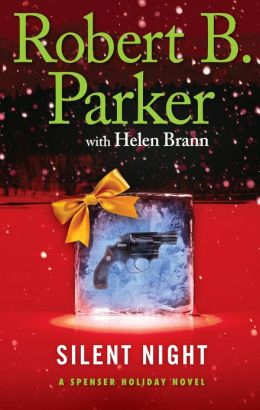
Silent Night: A Spenser Holiday Novel

by Robert B. Parker and Helen Brann

Parker’s longtime agent, Brann, completed this unfinished manuscript.  Spenser helps the operator of an unlicensed shelter who has been receiving threats.

Parker's Silent Night

Murder She Wrote: Murder Never Takes a Holiday

by Jessica Fletcher and Donald Bain

Two holiday-themed mysteries, “Manhattans & Murder”and “A Little Yuletide Murder,” are combined in one volume.

Discover Cornell Woolrich, author of “finest suspense novels ever written”

1

If you’re a mystery or suspense fan and have never heard of Cornell Woolrich, let me introduce you to one of the most prolific, stylistic and ingenious writers of the noir era.  His life was in some sense a tortured one containing successes and failures and dominated by his overbearing, wealthy mother.   Perhaps best known for his short story, Rear Window, which became an Alfred Hitchcock movie, Woolrich wrote more than 25 novels, numerous screen plays and dozens of short story collections.   According to IMDB.com Woolrich novels and short stories were used as the basis for more than 125 movies and TV dramas.

Woolrich died in 1968; few people attended his funeral.

Born in New York City in 1903, he struggled throughout the late 1920s and early 1930s writing short stories and (uncredited) screenplays for feature films in Hollywood.  While in California he married a producer’s daughter, but the marriage was short-lived and Woolrich returned to New York and his mother.  During the 1930s he wrote three novels and many short stories which appeared in pulp mystery magazines.  Gradually through his inventive plots and swift pacing he gained recognition and soon started cranking out superb noir suspense novels, many of which–if not all–became movies or TV dramas.

Eleven novels Woolrich published during the 1940s are “unsurpassable classics in the poetry of terror,” writes Francis M. Nevins, mystery writer, editor and Woolrich scholar.  Writing in the introduction to a Woolrich collection, Nevins says, “These [eleven] titles, all published between 1940 and 1948, make up the finest group of suspense novels ever written.”

The 1940s novels earned Woolrich a substantial living and a reputation on par with the best at work in noir.

Nevins says Woolrich’s world, “is a feverish place where the prevailing emotions are loneliness and fear and the prevailing action a race against time and death.”

“Woolrich’s fictional world is more discordant and threatening, and therefore perhaps more contemporary than that of either [Dashiell] Hammett or [Raymond] Chandler,” says Richard Rayner in the introduction to the 1988 Simon and Schuster collection, “Rear Window and Other Stories.”

Rear Window

This is one Woolrich collection that’s available, not the one mentioned in this article.

Rayner describes the situation one of Woolrich’s protagonists finds herself in as “something which might have been invented by Kafka on a bad day.”

The Woolrich novels are compelling but so are his short stories–his short crime tales from the 1930s are an excellent introduction to this author.  Originally this article was going to be a review of the “Rear Window” collection, but not only is it out of print, it seems to have disappeared.   In fact, many of Woolrich’s books are becoming rare.  Amazon and ebay prices for many used novels and story collections can reach more than $100 although many are available (used) in the $10 to $50 range.

There are other Woolrich collections called “Rear Window” available online but no listings I found provide the names of the stories included.  Thus, let me introduce you to a few of the master’s tales that you may find in more than one collection.

Woolrich stories often find average citizens stuck in impossible situations.  Such is the case in I Won’t Take a Minute (1940).  Protagonist Kenny is walking his fiancé home from work one evening and she has to stop at an apartment building to drop off a package that her boss asked her to deliver.  Kenny waits outside and she goes up in the elevator after telling him she won’t take more than a minute.  Of course she never returns, and the balance of the story is Kenny’s attempt to find her.

The Corpse Next Door (1937) is reminiscent of Poe’s Telltale Heart but Woolrich’s tormented main character is obsessed by the contents of a Murphy bed.  In, You’ll Never See Me Again (1939) , Ed Bliss has an argument with his wife who storms out supposedly heading for her mother’s house.   After two days Bliss is told that “Smiles” never made it to her mother’s and he runs afoul of the police in a frantic attempt to find his wife.  The 41-page story is filled with nighttime car chases, resourceful amateur sleuthing and repeated searches through a sinister house in the country.

In Dead on Her Feet (1935), rookie detective Smith is sent to investigate a nine-day old dance marathon and locate one Toodles McGuire, a 16-year-old whose mother has called police.   Detective Smitty, who flips over his jacket lapel to flash his badge, locates the missing girl but then finds himself investigating a murder.  His method of solving the case is macabre but effective.

Woolrich died at the age of 64 after many years of ill health and depression following the death of his mother.   According to Nevins, in a fragment of his papers found after his death Woolrich wrote, “I was only trying to cheat death.  I was only trying to surmount for a little while the darkness that all my life I surely knew was going to come rolling in on me some day and obliterate me.”