Nostalgia City Mysteries

Mark S. Bacon

Category Archives: mystery writers

Two new detectives uncover murderous plots

0
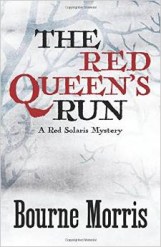
The Red Queen’s Run – A Red Solaris Mystery
Bourne Morris
Henery Press 280 pages
$28.79 hardcover $14.26 trade paper $2.99 Kindle
 
Focused on Murder – A Spirit Lake Mystery
Linda Townsdin
CreateSpace   286 pages
$11.59 trade paper $2.99 Kindle

A  journalism professor and a press photographer are two of the newest amateur sleuths drawn into investigating murders in their own back yards. A crumpled body at the bottom of concrete stairs in a Nevada university journalism school and a corpse buried in snow in northern Minnesota are the beginning points for these two rewarding whodunits. Both books are the initial offerings in mystery series. In these two mysteries you can get to know the appealing protagonists and be ready for the next installments. Both are due this year.

Morris’s Red Queen mystery is several stories in one: an inside look at the The-Red-Queen's-Runjealousies and esoteric workings of academia, a love story and, of course, a whodunit.   The crime and the novel revolve around the journalism school at a western university. Lest you imagine that a university is not the place to look for murderous intent, Morris begins her book this way:
Anyone who thinks a college campus is a haven of scholarship and civility hasn’t been paying attention. Last year, I sat through a dozen faculty meetings with recurring visions of Dr. Amy Bishop flooding my mind. I could almost see Bishop seated in a 2010 faculty meeting at the University of Alabama, then see her stand, aim a nine millimeter gun at her friends and colleagues across the table and begin firing. Before her gun jammed, Bishop had killed three people, wounded three others…

This description is in the words of journalism professor Meredith “Red” Solaris, narrator of the first-person story. This jolting beginning puts you on guard for the confrontations that ensue among the faculty at Mountain West University. When the dean of the journalism school is found dead, it’s unclear if it was an accident or homicide. Before too long, Solaris has demonstrated her human relations skills keeping the school of journalism together amid the rivalry, rancor and professional conflicts that emerge with the dean’s death.  Members of the mutinous and possibly murderous faculty are drawn with detail so you can imagine them as real (and unusual) people plotting against each other.

Thirty-five year old Solaris, called Red because of her dark, thick red hair, is challenged to maintain the independence of the school, determine if one of her colleagues is a killer and generally decide the direction her life should take. She worries that people are expecting too much from her. But she has help from Sadie, a close friend she regularly meets over wine and, most important, a handsome police detective assigned to the case.

Is it murder or an accident? The investigation drags on as we watch Solaris sort out motives, uncover several surprises, and gradually develop feelings for the detective. Through Solaris’s asides and Morris’s voice you become comfortable with the level-headed, if sometimes insecure lead character. Solaris may be an academic but her background also has made her a good sleuth. For example, she meets an attorney who wants to appear kindly but, “His tone was friendly but his eyes were not.”

“Is there no limit to the wickedness of the journalism faculty?” Sadie asks Solaris at one of their luncheons. Wait for the clever conclusions in the circuitous ending and you’ll find out.

——-

In Townsdin’s Focused on Murder, murder is not the only crime going on amid the frozen lakes and frigid forests of northern Minnesota and rash but resourceful news photographer Britt Johansson is right in the middle of it.

Focused-on-Murder-coverWhen the tall Pulitzer Prize winner is betrayed by her husband and fired from the Los Angeles Times, she returns to her hometown of Spirit Lake where she hopes to reconnect with her childhood boyfriend and her gay brother who runs a restaurant. She lands a job taking pictures in the generally sleepy northern Minnesota bureau of the Minneapolis Star-Tribune. After a career shooting in war-torn parts of the world, taking snaps at town-hall meetings is putting Johansson to sleep, so when she accidentally stumbles on a body in the snow, she latches onto the story.

Told by the sheriff and her newspaper boss to stay out of it, Johansson naturally dives in. What she discovers going on in the back woods shocks her and ultimately the community—and will do the same for readers. All that snow can’t cover the ruined lives and evil family secrets.

This passage from early in the book describes Johansson—also a reformed drinker—and demonstrates author Townsdin’s writing skill and sense of humor:

“The word patience did not exist in my vocabulary. Act first, think later—maybe. Another one of those character defects they talk about in AA. Personality traits I’d been proud of turned out to be what they wanted you to stop.”

Johansson is adroit getting information from the collection of seedy, seamy characters that Townsdin has assembled, but all Johansson’s attempts to reconcile with her estranged boyfriend seem to fail: “That was not the first time Ben took the wag out of my tail.”

Townsdin has created a challenging mystery, spiced it with a cast of deceitful suspects and added appealing touches of noir in the dark settings and some of the dialog.

“The sky was the color of skim milk, what passed for sunshine in this part of the country.”

“I tossed the lie in with the rest of the sins in my storehouse.”

The novel’s ending is complex, compelling and like the conclusion of The Red Queen’s Run , leaves an opening for more adventures.

Glass Key: A lesser known Hammett Classic

0
The Glass Key
Dashiell Hammett
Vintage 214 pages
$9.99 Kindle, $11.38 trade paper

Tall, lean Ned Beaumont smokes green-dappled cigars. He’s a gambler and sometimes deep thinker. Absently, he strokes his moustache with a thumbnail. Professionally, he’s a fixer for big-city political boss Paul Madvig. Beaumont is not above violence, a little blackmail and the necessary bribery that goes into keeping a metropolitan political machine running. He has a code, however expedient it might seem, and Dashiell Hammett’s The Glass Key is all about how far Beaumont is willing to go to protect and serve Madvig.

There’s enough seedy, dark atmosphere here for several noir novels, but Hammett is the father of the genre, so you expect nothing less. Reviewing this story, which The-Glass-Key-new-cover blends murder, politics, blind love and friendships pushed to the limit, from a perspective of more than 80 years after it was first printed, poses problems. Because Hammett pioneered scenes with street lights casting deep shadows across people’s faces, furtive looks and street-tough, depression era dialog, you get the feeling you’ve heard this all before. For example, the little we learn of Beaumont’s background is that Madvig picked him up out of the gutter and gave him a job. Heard that before? Perhaps Hammett lifted the line from Dickens or someone else, but in The Glass Key, he owns the tough-talk dialog and everything that came later is just a copy.

The story is relatively simple, again something we’ve seen bits of before in later dramas and novels. Madvig wants to put his political power behind Senator Henry for re-election. Beaumont counsels against it but realizes that his advice will not likely be heeded because Madvig is in love with the senator’s daughter. When the senator’s son is found murdered, there’s enough suspects to go around.

Beaumont is not a detective, but his knowledge of the unidentified eastern city’s underworld—and crooked politicians—gives him several leads to chase. Before he can start sorting out the murder, however, he has to find a bookie, Bernie Despain, who has scrammed with $3,250 of Beaumont’s winnings. That accomplished, Beaumont is beaten up, tortured and lied to, not necessarily in that order, as he deals with a sycophantic DA, a sadistic mob boss and women who are not quite what they seem.

Hammett relies on facial expressions to communicate characters’ personalities and emotions.

His hair was a florid stubble above a florid, pugnacious face.

He moved the corners of his mouth impatiently.

His face was tired and sallow.

Her face was a tinted statue’s.

The-Glass-Key-vintage-coverIn combination with facial expressions, he gives the reader a generous dose of noir dialog.

“How far has this dizzy blond daughter of his got her hooks into you?”  

“What’s the idea,” He demanded. “What’s the idea of talking to the little lady like that?”

The Glass Key was written in 1931, just after The Maltese Falcon and before The Thin Man, two of his more famous novels. It was turned into two films, a 1935 version with George Raft and a 1942 movie with Alan Ladd and Veronica Lake. Neither film is available on Netflix and only the 1942 film can be found on Amazon.

Hammett takes Beaumont on a circuitous journey–almost Kafkaesque at times–to find murderers, to find the truth and to find himself. It’s a journey most readers will enjoy and for students of noir it offers similarities and stark differences with the Falcon which preceded it.

Help! How can I get this thing started?

0

Where, or, more accurately, how do you start a mystery novel? Certainly not with the familiar dark and stormy night, the now-cliched beginning penned 185 years ago by British novelist Edward Bulwer-Lytton.

When I began writing my mystery/suspense novel, Death in Nostalgia City, I, like many authors, agonized over the first few sentences.   I tried one thing then another, turning to help from writer friends and finally settling on something, only to change it just before I submitted the manuscript to my publisher.

First sentences are something like first impressions when you meet someone. Writers try to impress, intrigue, attract. They have a story to tell and they want to begin in a way that encourages you to dig in.

With a mystery, there’s usually murder involved.  Why not start with that?

“Hale knew, before he had been in Brighton three hours, that they meant to murder him.” That’s how Graham Greene began his dark 1938 tale, Brighton Rock.

Jonathan Kellerman used a short murder sentence to begin The Murder Book, his 2002 novel.  “The day I got the murder book, I was still thinking about Paris.”Web-opti-gun-&-paper-Es5914

Short, declarative sentences. That gets your attention and draws you into the story. Here’s another one, this from noir master James M. Caine. He began his famous, The Postman Always Rings Twice this way: “They threw me off the hay truck about noon.”

First sentences can do more than just attract attention. Some writers and editors suggest first sentences that introduce readers to a character, a setting, or both.

An excellent example of this comes from an acclaimed, but non-mystery writer, William Kennedy. The beginning of his 1983 Ironweed accomplishes these objectives with grace.

     Riding up the winding road of Saint Agnes Cemetery in the back of the rattling old truck, Francis Phelan became aware that the dead, more than the living, settled down in neighborhoods.

Elmore Leonard famously said, “Never open a book with weather,” but that’s exactly what many authors have done, including Raymond Chandler in The Big Sleep:

     It was about eleven o’clock in the morning, mid-October, with the sun not shining and a look of hard wet rain in the clearness of the foothills.

Mystery writer Lilian Jackson Braun used weather to begin The Cat Who Tailed a Thief in 1997: “It was a strange winter in Moose County, 400 miles north of everywhere.”

Leonard himself was no slouch with beginnings. In his 1988 novel, Freaky Deaky, he introduces his character and setting in one sentence that has you immediately engrossed in the story:

     Chris Manowski’s last day on the job, two in the afternoon, two hours to go, he got a call to dispose of a bomb.

I don’t think there’s a single formula for a successful beginning, but I think some of the most successful have discernible objectives.

In his 2007 mystery, Tahoe Silence, writer Todd Borg uses his first sentence not only to introduce the title character of the book, but also to draw us into the world of the autistic girl named Silence.

     At the first roar of the motorcycles on Pioneer Trail, Silence shut her eyes, tucked her sketchbook under her left arm and plugged her ears with her fingers, turning inward, retreating to her safe zone.

The objective of just attracting your attention quickly can be effective and a quotation can be an easy way to do it.

      “Not a bad-looking burglar,” he said. “I don’t suppose you’d happen to have a decent alibi?”

That’s the way Lawrence Block began, The Burglar Who Traded Ted Williams (1994), using a light touch. Humor can put a reader in a good mood to continue reading and, at the same time, introduce a setting or character as Nevada Barr does in the beginning of 2001’s Blood Lure:

     With the exception of a nine-week-old Australian shepherd puppy, sniffing and whining as if he’d discovered a treasure chest and sought a way inside, everyone was politely pretending Anna didn’t stink.

I wanted to use a light touch to introduce my story and my protagonist, ex-cop Lyle Deming. The book’s retro focus comes from the theme park, Nostalgia City, a re-creation of an entire small town from the late 1960s / early 1970s. Lyle, who drives a cab in the park, fits in due, in part, to his view of modernity. I wanted to show this, and introduce him in the beginning.

     Whose idea was it to replace the chrome knobs and push buttons on car radios with touch screens?   Lyle didn’t have a clue.