Noir movie review
In a Lonely Place is a profound relationship film of trust and the meaning of love highlighting Humphrey Bogart’s best performance and delivering a moody, heartbreaking story tinged with suspicion and regret.
At least that’s the opinion of critics and film goers alike. Not exactly mine. It’s a fine picture though. I can explain.
Robert Muller, host of Turner Classic Movies’ “Noir Alley” and author of books on film noir says the 1950 movie is his “all-time favorite film” and marks Bogart’s “unmistakably most personal role.”
The late critic Roger Ebert also gave Bogart high praise in his portrayal of a vulnerable, flawed man and says the film was “a superb example of the mature Hollywood studio system at the top of its form.”
Rotten Tomato’s audience score was 89 percent and reviewers gave 96 percent approval. The Guardian’s Peter Bradshaw’s review was typical: “A noir masterpiece.”
I saw the movie many years ago and remembered being unimpressed. I watched it recently for this review, however, and now appreciate the story and the acting. Nevertheless, I watched the film this second time after reading the novel of the same name, by Dorothy B. Hughes. The book is superb and yet so completely different from the film it gave me a case of cognitive dissonance.
But a great movie can be made from a great book, even if it ignores the book, right? In the book, Dix Steele is a serial rapist and murderer. In the film he’s a depressed movie script writer with a dangerous hair-trigger temper.
The film begins with Steele driving his top-down convertible in Hollywood. At a stop-light a blonde passenger in the car next to him recognizes Steele:
“Dix Steele! How are you?” she says. “Don’t you remember me?”
“No, I’m sorry. I can’t say that I do.”
“You wrote the last picture I did at Columbia.”
“I make it a point never to see pictures I write.”
The driver of the car interrupts and tells Steele to “stop bothering my wife.”
Steele then insults him and the driver tells Steele to pull over to the curb. “What’s wrong with right here,” says Steele. As he starts to open his door, the other car speeds off.
This scene introduces Bogart’s character, his occupation and his usual disposition. The second scene is commentary on the plot and rounds out Steele’s circumstances and perhaps his future:
He drives up to a Hollywood restaurant and before he enters, he’s approached by two children. One asks for his autograph.
“Who am I?” Steele asks.
“I don’t know,” the child replies.
“Don’t bother, he’s nobody,” the other child says.
“She’s right,” Steele says as he’s signing the autograph book.
When he meets his agent at the restaurant bar he tells Steele that he’s got a job for him. A film producer wants him to adapt a novel and the agent gives him the book.
“You’ve got to go to work,” the agent says, “you’ve been out of circulation too long.”
Steele tells him he won’t work on a book he doesn’t like.
“Are you in any position to be choosy,” says a film director seated next to them at the bar. “You haven’t written a hit since before the war.”
Steele seems to relent and as he leaves he hires a coat-room clerk to read the book to him. Continue Reading →
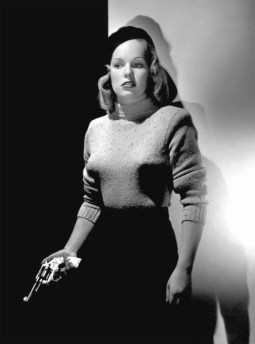
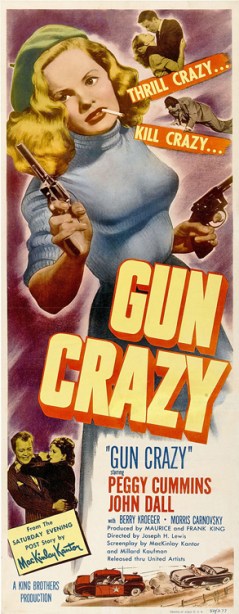 As we learn in the film’s first scene, Bart became a crack shot through years of shooting bb guns and larger weapons as a child. His obsession with guns—despite abject fear of hurting anyone or anything—leads him to steal a revolver from a store window. He’s caught and sent to reform school before joining the service.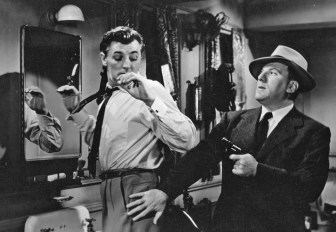
 Nostalgia City Mysteries