Book Review
Dark Passage (1946)
David Goodis
Library of America 2012
247 pages
Kindle, Apple Books $5.99
Vincent Parry’s wife was an ungrateful, unloving bitch. But he didn’t kill her.
A jury said he did, and the judge gave him life in San Quentin.
This seemed like it would be the last chapter in Parry’s unremarkable life. An only child and orphan in central Arizona he stole food when he was hungry and found himself in a reformatory being punched in the face by a guard. 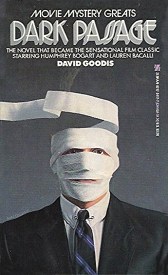 During World War II his draft board labeled him 4-F due to sinus and kidney problems. The 145-lb, five-foot-seven-inch Parry found work as a clerk in a San Francisco securities investment house, a position he took because it would permit him to smoke at work. He earned $35 a week and smoked three packs a day.
Early in their marriage, at her insistence, Parry bought his wife Gert a ring with a flame opal, her favorite stone. She told him it was flawed, that he paid too much and she threw it at his face. Less than a year and a half after they were married, she started seeing other men.
One day he came home to find police cars parked in front of his apartment building. Gert had been murdered, her skull smashed by a heavy glass ashtray. A witness told police the wife’s dying words were that Parry had killed her.
Parry’s attorney asserted that Mrs. Gert Parry simply tripped and hit her head, but no one was buying it.
Dark Passage is a story of lonely, sad, miserable people. The book envelopes the reader in an atmosphere as cheery as a rainy night in a graveyard.
In San Quentin Parry worried about the guards, remembering his experience in the reformatory. But he thought this might be different.
He had an idea that he might be able to extract some ounce of happiness out of prison life. He had always wanted happiness, the simple and ordinary kind. He had never wanted trouble.
 Eventually, however, he again met up with a brutal guard. During the ensuing pummeling, Parry sobbed, a reaction that would revisit him more than once in the coming weeks.
When he was placed in solitary confinement temporarily, and permanently removed from his prison accounting job, he decided to escape.
He made it, and once outside the prison grounds a young woman in a new Pontiac convertible offered him a ride, telling him she heard of his escape on the radio and came to help him. “You’ll stay at my place,” she tells him.
Vincent Parry’s life was about to turn around. And around.
Once safe in the expensively furnished San Francisco apartment Parry learns his blonde savior’s name, Irene Janney.
The way her lips were set told him she didn’t get much out of life. One thing, she had money. That grey-violet [her clothes] was money. The Pontiac was money.
She tells him she attended his trial and that Madge Rapf, the woman who found Gert’s body and heard her dying words, is an acquaintance of hers.
Parry knows Rapf, a friend of his wife’s who visited them frequently. Too frequently.
She was miserable and the only thing that eased her misery was to see other people miserable. If they weren’t miserable she pestered them until they became miserable. Parry had a feeling that one of the happiest moments in Madge Rapf’s life was when the foreman stood up and said that he was guilty.
Parry’s fate begins to look promising when Janney buys him new clothes and gives him $1,000 in cash for the road.
He leaves her, hales a cab and is identified as a fugitive by the driver. But instead of turning him in, the driver tells Parry about a doctor friend of his, a plastic surgeon, who could give him a new face—no questions asked. Continue Reading →
 acdonald as the literary heir of Dashiell Hammett and Raymond Chandler, as the writer who polished and redefined the classic detective hero. Macdonald said Chandler was one of his (other) main inspirations. He took Philip Marlowe and added a layer of psychosocial depth. But not right away.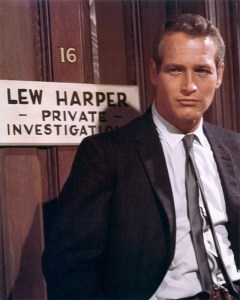
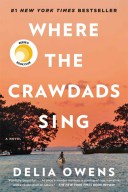 Praise for Where the Crawdads Sing by Delia Owens is everywhere. It’s a beautiful coming of age story, an invitation to explore and appreciate nature—from frolicking microscopic life to squawking gulls—a love story of sorts and a meditation on social isolation. It’s also a mystery. Blended seamlessly, these elements create a story that will carry you away to the coastal marshlands of North Carolina and make you forget just about all else. It was the first book I read when the lock-down began and was just what I needed.
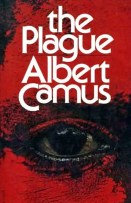 Next, when the bad news completely seeped into my consciousness, I reached for The Plague by Albert Camus. I’d read it years ago and still had it on my Kindle. Very timely I thought, but I couldn’t read more than a few chapters. It’s too realistic. First, the rats start dying… It’s a classic by the French existentialist author, complete with allegory, but not for now.
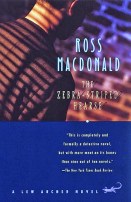 I’ve been working my way through Ross Macdonald’s Lew Archer PI series and picked up The Zebra Striped Hearse. This complex story, published in 1962, begins with a rich ex-military man hiring Archer to dig up dirt on his daughter’s fiancée who he suspects of being a gold digger. The repressed 24-year-old daughter has fallen for an itinerant artist who’s been traveling under a variety of aliases.
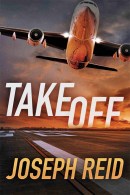 Takeoff by Joseph Reid is a thriller with mystery elements revealed gradually through the fast-moving story. The foundation of the book is the well-rendered relationship between Max, a rising sixteen-year-old female rock star, and Seth Walker an emotionally vulnerable federal air marshal assigned to protect the recalcitrant phenom on a cross-country flight. When they land at LAX instead of handing off Max and getting back to his regular job, Walker and his charge are greeted with automatic weapons fire. The two go on the run, pursued by unknown gunmen while Walker suspects betrayal by federal agents. Walker is an electrical engineer with more than a dozen patents to his name and uses his ingenuity to keep he and Max alive while he tries to uncover details in the young girl’s past that may be influencing her present. Likable characters in bad trouble make for an engrossing read.
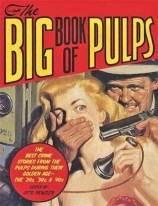 My next read, after we’d finally made it home, was a book I’d purchased a few years before and never had much time for. Know the feeling? The Big Book of Pulps is a collection of dozens of noir stories from the 1920s through 1940s. The table of contents looks like a directory of the best authors in the genre. Rather than begin at the beginning, I started with my favorite authors. The book contains three stories each by Raymond Chandler, Cornell Woolrich and Dashiell Hammett. Other authors include James. M. Cain; Carroll John Daly, credited with writing the first U.S. detective novel; and Earl Stanley Gardner. In one Gardner story, Ken Corning, precursor to Perry Mason, leaps on the running board of a car and battles gunmen. Not the deft courtroom-style exchange you might expect from watching Raymond Burr.
 Nostalgia City Mysteries