As I was saying last time, I love theme parks. And since the time I worked for one, I’ve thought a theme park would be a great setting for a murder mystery. So let’s start at the beginning.
Many, many years ago I was a young copywriter in the advertising department at Knott’s Berry Farm. At the time, Knott’s was an old west ghost town complete with roving gunslingers. It also included a charming combination of carnival type rides, shops and some new, inventive attractions. Although I spent most of my time in an office writing ads and commercials, I had an opportunities to work on the park grounds, explore behind the scenes, and get to know some of the costumed employees who entertained guests.

Knott’s Berry Farm ghost town
Not so many years ago, when I found a publisher for my first murder mystery, the story was set in a theme park, based in part on my earlier experiences at Knott’s. But instead of fashioning my theme park like Knott’s—or any other park—I wanted to do something different. I created an entire 1970’s small town, Nostalgia City. It’s a trip back in time, a meticulous re-creation, complete with pet rocks, leisure suits, disco and period cars from Pontiacs to Pintos.
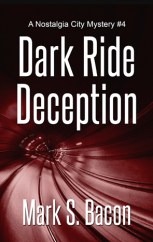
Four years ago, as I mentioned last time, I went to Disney World with my two grown daughters. It was a trip of a lifetime and I picked up further inspiration. Nostalgia City, I decided, needed new, high-tech dark rides, thus the title of my next book: Dark Ride Deception. A dark ride is simply theme park jargon for indoor attractions. The old-fashioned boat ride through the tunnel of love is a dark ride dating back more than a century.

Is this the type of theme park ride that the Perception Deception Effect can create?
To supply Nostalgia City’s new dark rides, the park’s computer genius Tom Wyrick created the Perception Deception Effect. His mind-bending technology could easily eclipse the entire theme park industry. But the ride technology disappeared—along with Wyrick. Nostalgia City’s ex-cop cab driver, Lyle Deming, is drafted to find the computer wiz and recover his secrets. The obvious places to look, Lyle’s boss tells him, are other theme parks.
Lyle is relatively tech savvy, but the details of the Perception Deception Effect prove perplexing. He gets technical help from a Nostalgia City engineer who becomes a little too over-excited about sleuthing.
—————————-
The novel focuses not on high-tech minutia but on intrigue and Lyle’s struggles.
—————————-
The plot is obviously based in part on the science behind dark rides, and one of the book’s characters, a Nostalgia City computer programmer, dissects one of Disney’s most famous, yet relatively unsophisticated rides. But the novel focuses not on high-tech minutia but on intrigue and Lyle’s personal struggles as he searches for the secrets. He hides behind a variety of false identities to investigate Florida parks—from the inside—yet when someone threatens to blow his cover…
But that’s enough of a preview. Like I said, I love theme parks, and I loved writing about them in Dark Ride Deception.
The book is available for preorder wherever you get your e-books. It will be released Sept. 20.
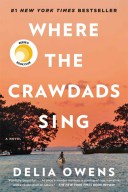 Praise for Where the Crawdads Sing by Delia Owens is everywhere. It’s a beautiful coming of age story, an invitation to explore and appreciate nature—from frolicking microscopic life to squawking gulls—a love story of sorts and a meditation on social isolation. It’s also a mystery. Blended seamlessly, these elements create a story that will carry you away to the coastal marshlands of North Carolina and make you forget just about all else. It was the first book I read when the lock-down began and was just what I needed.
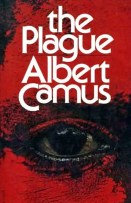 Next, when the bad news completely seeped into my consciousness, I reached for The Plague by Albert Camus. I’d read it years ago and still had it on my Kindle. Very timely I thought, but I couldn’t read more than a few chapters. It’s too realistic. First, the rats start dying… It’s a classic by the French existentialist author, complete with allegory, but not for now.
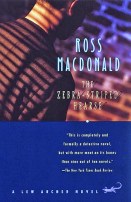 I’ve been working my way through Ross Macdonald’s Lew Archer PI series and picked up The Zebra Striped Hearse. This complex story, published in 1962, begins with a rich ex-military man hiring Archer to dig up dirt on his daughter’s fiancée who he suspects of being a gold digger. The repressed 24-year-old daughter has fallen for an itinerant artist who’s been traveling under a variety of aliases.
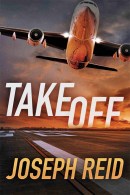 Takeoff by Joseph Reid is a thriller with mystery elements revealed gradually through the fast-moving story. The foundation of the book is the well-rendered relationship between Max, a rising sixteen-year-old female rock star, and Seth Walker an emotionally vulnerable federal air marshal assigned to protect the recalcitrant phenom on a cross-country flight. When they land at LAX instead of handing off Max and getting back to his regular job, Walker and his charge are greeted with automatic weapons fire. The two go on the run, pursued by unknown gunmen while Walker suspects betrayal by federal agents. Walker is an electrical engineer with more than a dozen patents to his name and uses his ingenuity to keep he and Max alive while he tries to uncover details in the young girl’s past that may be influencing her present. Likable characters in bad trouble make for an engrossing read.
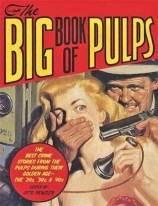 My next read, after we’d finally made it home, was a book I’d purchased a few years before and never had much time for. Know the feeling? The Big Book of Pulps is a collection of dozens of noir stories from the 1920s through 1940s. The table of contents looks like a directory of the best authors in the genre. Rather than begin at the beginning, I started with my favorite authors. The book contains three stories each by Raymond Chandler, Cornell Woolrich and Dashiell Hammett. Other authors include James. M. Cain; Carroll John Daly, credited with writing the first U.S. detective novel; and Earl Stanley Gardner. In one Gardner story, Ken Corning, precursor to Perry Mason, leaps on the running board of a car and battles gunmen. Not the deft courtroom-style exchange you might expect from watching Raymond Burr.
 Nostalgia City Mysteries